
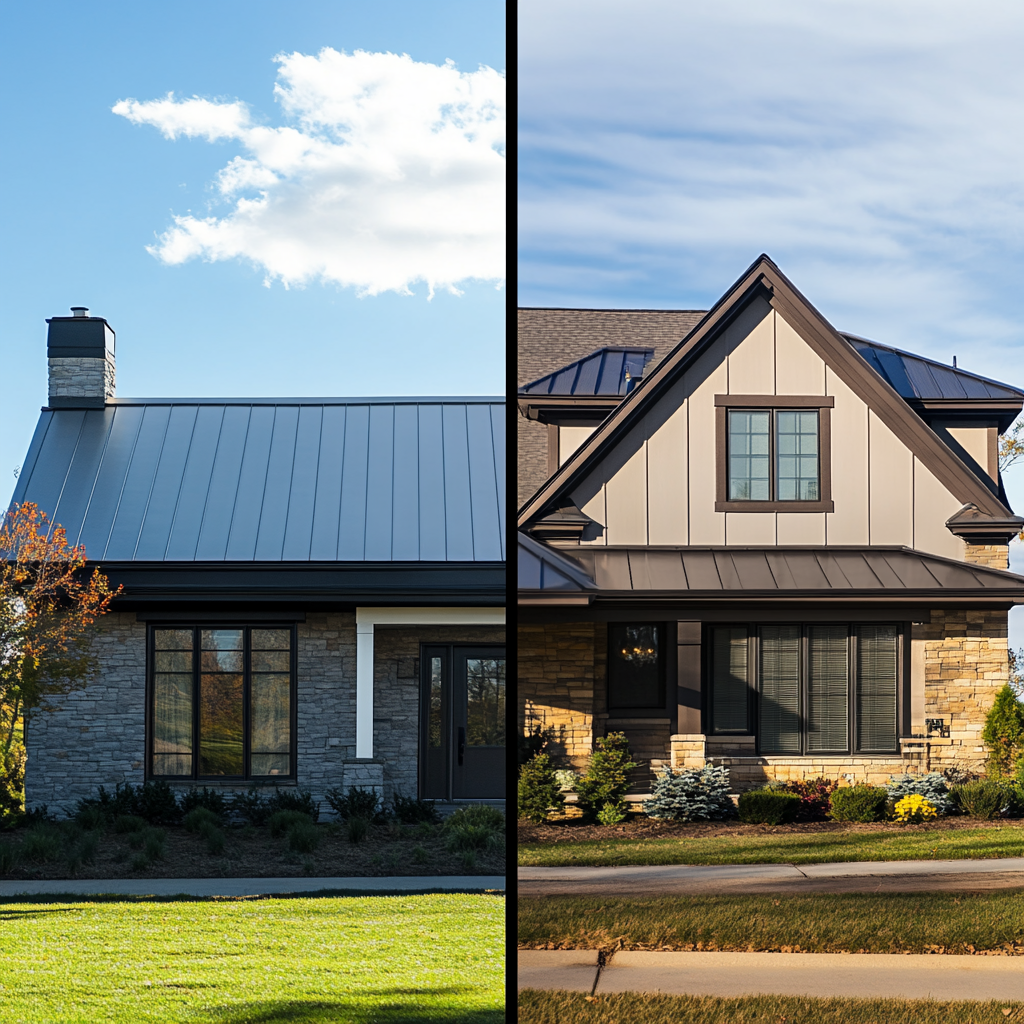
Considering metal roofing requires weighing upfront costs against long-term benefits. You’ll face a higher installation cost, averaging $47,414, yet homeowners recoup around 48.9% upon resale. Metal roofs endure for 30 to 70 years, enduring severe weather and reducing maintenance needs considerably compared to traditional roofs. Their energy efficiency cuts cooling costs by up to 25%, boosting home value and offering potential tax credits. Aesthetic versatility and fire resistance can also lower insurance premiums. Given these factors, metal roofing can be a strategic investment aligning with sustainable living goals. To grasp the full scope, there’s much more to explore.
Upfront Costs of Metal Roofing
When weighing the upfront costs of metal roofing, looking beyond the initial sticker shock is essential. Metal roofing’s initial investment, with an average installation cost of $47,414, might seem intimidating compared to traditional asphalt shingles. However, an innovative perspective reveals that this expense is a strategic investment in your home’s future. The return on investment is tangible; homeowners typically recoup around $23,163 upon resale, equating to a 48.9% cost recouped nationally.
Metal roofing isn’t just about aesthetics; it’s a powerhouse of energy efficiency. By reflecting solar radiant heat, it considerably reduces cooling costs. This energy-saving aspect contributes to its value, positioning metal roofing as not only a cost-effective choice but also an environmentally conscious one. Beyond energy efficiency, consider the potential savings on maintenance and repairs. Metal roofs, with warranties ranging from 20 to 50 years, require less upkeep and withstand severe weather better than many alternatives, minimizing unexpected expenses.
Longevity and Durability
Looking beyond the initial costs, it’s important to contemplate the longevity and durability of metal roofing. When investing in a metal roof, you choose a roofing material known for its long lifespan and resilience. Metal roofs can last at least 30 years, with premium options extending to over 50 years, far outlasting traditional asphalt shingles. This longevity means fewer replacements and less frequent repairs, translating into long-term cost savings.
Consider these impressive durability features:
- Weather Resistance: Metal roofs are engineered to withstand severe weather conditions, including high winds, heavy rain, and snow. This makes them an excellent choice for homeowners in diverse climates.
- Fire Resistance: Being non-combustible, metal roofing materials offer enhanced protection against fire, potentially lowering your homeowners’ insurance premiums.
- Warranty Coverage: Metal roofing often comes with 20-—to 50-year warranties, offering peace of mind with long-lasting coverage.
- Maintenance Efficiency: Metal roofs’ durability guarantees minimal maintenance, reducing the hassle and costs associated with frequent repairs.
Energy Efficiency Benefits
Metal roofing’s energy efficiency offers significant long-term benefits, making it a wise investment for homeowners. By reflecting solar radiant heat, metal roofs can slash your summer cooling costs by up to 25%, contributing to substantial energy savings over time. This energy efficiency is further enhanced with coated metal options that minimize heat absorption, reducing heating costs during winter. Such features lead to lower energy bills and make metal roofs a compelling choice for those seeking sustainability.
Moreover, when metal roofs are installed as Energy Star-rated products, you may qualify for tax credits and rebates, adding a financial incentive to this investment. Metal roofing materials often contain recycled content, underscoring their commitment to sustainability and reducing environmental impact. Their impressive lifespan means you won’t need to replace your roof frequently, aligning with economic and ecological goals.
Maintenance Requirements
Over the years, metal roofing has proven to be a low-maintenance option compared to traditional materials. If you’re weighing the benefits of metal roofing, the maintenance requirements are a critical factor. Here’s why metal roofs make an innovative choice:
- Minimal Maintenance: Metal roofs, especially standing seam systems, are nearly maintenance-free post-installation. This differs sharply from traditional materials like wood or asphalt, which demand frequent upkeep.
- Annual Inspections: While metal roofing is robust, it’s wise to conduct yearly inspections. Check for leaks around penetrations, ensuring your roof remains in peak condition with minimal effort.
- Screw-Down Panel Systems: These require more attention and regular maintenance to prevent issues. However, even this is modest compared to the demands of traditional roofing materials.
- Long-Term Cost Savings: Metal roofs’ durability minimizes repair needs, reducing long-term costs. Metal roofs offer a lasting solution, unlike materials that can decay, delivering significant savings over time.
In essence, metal roofs’ low maintenance makes them a smarter, more economical choice over their lifespan. Their reduced maintenance demands align perfectly with a future-focused approach, ensuring your investment remains sound and sustainable.
Impact on Curb Appeal
When you consider the impact of metal roofing on curb appeal, it’s clear that these roofs pack a punch in enhancing a home’s visual appeal. Metal roofs offer a wide range of colors and styles, allowing you to tailor your roofing project to complement various architectural designs. This customization boosts your property’s curb appeal and aligns with innovative, forward-thinking projects that set your home apart in the neighborhood.
Metal roofs’ versatility allows them to mimic traditional materials like tile or slate while offering superior durability. This means your home can enjoy the timeless appeal of classic aesthetics with the modern benefits metal roofing provides. Additionally, a metal roof’s sleek, contemporary look can increase your property’s perceived value, making it more marketable.
Moreover, metal roofs maintain their appearance over time, resisting fading and corrosion. This long-lasting curb appeal guarantees that your home continues to look attractive, enhancing its resale potential. As metal roofing technology advances, your home stands out, contributing to a stronger perceived value and attractiveness that appeals to potential buyers and neighbors alike.
Resale Value Considerations
Why should you consider metal roofing for your home’s resale value? Investing in a metal roof can considerably impact your home’s marketability and financial return. Despite the higher initial costs, metal roofing offers a compelling advantage regarding resale value. Here’s why:
- High-Cost Recoupment: Homeowners can recoup up to 85% of the installation cost of a metal roof upon resale, highlighting its potential as a smart investment.
- Increased Home Value: On average, replacing your roof with metal costs about $47,414, while the resale value typically hovers around $23,163, translating to a cost recouped of 48.9%.
- Enhanced Buyer Appeal: Metal roofs’ longevity and minimal maintenance appeal to buyers, increasing the perceived value of your home.
- Superior Marketability: Compared to traditional asphalt shingles, metal roofing can make your home stand out, offering an edge in competitive real estate markets.
Choosing metal roofing isn’t just about immediate benefits; it’s a strategic long-term investment. Its durability and energy efficiency boost home value and assure potential buyers of reduced future maintenance costs, making it an innovative choice for forward-thinking homeowners.
Assessing Return on Investment
In evaluating the return on investment for metal roofing, it’s essential to contemplate both the short-term and long-term financial impacts. Metal roofs may seem costly initially, but their longevity offers substantial advantages. While you can expect to recoup about 48.9% of the installation cost upon resale, the true value lies in their extended lifespan of 30-70 years, dramatically reducing replacement expenses compared to traditional materials that last only 15-20 years.
Energy efficiency is another vital component when examining the return on investment. Metal roofs reflect solar radiant heat, which can lower cooling costs and enhance long-term savings. The potential reduction in energy bills greatly offsets the initial installation costs. Additionally, insurance savings from fire resistance and durability add another layer of financial benefit. These attributes often translate into lower premiums, further improving your return on investment.
The aesthetic appeal should not be overlooked, either. Metal roofs can increase your home’s perceived value, making it more attractive to prospective buyers. This aesthetic advantage and their functional benefits underscores the strategic value of investing in a metal roof. By examining these factors, you can make an informed decision that aligns with innovative home improvement goals.
Conclusion
When weighing metal roofing’s cost against its value, remember that metal roofs can last over 50 years, more than double the lifespan of asphalt shingles. This durability means fewer replacements and repairs, saving you money in the long run. Plus, metal roofs can reduce cooling costs by up to 25% due to their energy efficiency. So, while the initial investment seems high, the long-term savings and potential increase in resale value make it a smart, future-proof choice.